
30 September
Nobel Laureate Ada Yonath, who fought against antibiotic resistance, has passed away 
By Bessy ADUT
There are certain public figures whose lives become so intertwined with their legacy that it becomes difficult to remember the person who existed before the fame. Anthony Bourdain was one of those rare figures. A chef, writer, storyteller, traveler, and cultural icon, Bourdain eventually became known around the world for his distinctive voice, curiosity, and ability to connect food with humanity.
Tony, directed by Matt Johnson, takes a refreshingly different approach to the conventional celebrity biopic. Rather than attempting to compress Bourdain's entire life and career into two hours, the film concentrates on a formative period of his youth, offering audiences a glimpse of the restless young man before he became the Anthony Bourdain the world would come to know.
The result is a spirited coming-of-age story that explores how the young Anthony Bourdain began to find his direction. Sweet in some moments and tart in others, the film ultimately becomes a heartfelt tribute to mentorship, friendship, and the people who can change the course of a young person's life.
Based on material from Bourdain's memoir Kitchen Confidential, the film follows the young Tony during a pivotal summer in Provincetown, Massachusetts, when an unexpected turn in his life leads him into the restaurant business. At this stage, Bourdain is not yet the celebrated author, television personality, traveler, or culinary storyteller audiences would eventually recognize. He is young, inexperienced, rebellious, and searching for direction.
The kitchen becomes the unlikely environment in which he begins to discover not only the profession that will shape his future, but also the person he might become.
A24 released Tony in select U.S. theaters on August 7, 2026, with the film scheduled to expand nationwide on August 21. The first trailer arrived in May, introducing audiences to Dominic Sessa's young Bourdain and the chaotic restaurant world that would become the setting for this important chapter of his life.

Dominic Sessa as Tony
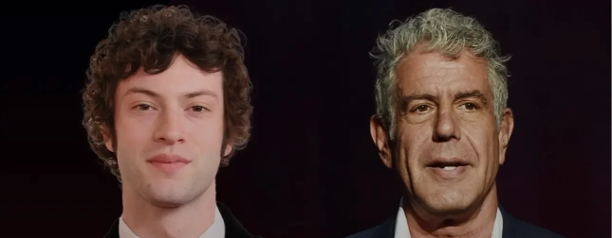
Last year, Dominic Sessa, who gained widespread attention for his breakthrough lead performance in The Holdovers, was cast as the late Anthony Bourdain in Tony. I think he was a particularly good choice for the role.
Having seen Sessa previously in The Holdovers, I noticed a certain similarity between the screen persona he brings to both characters. There is something naturally youthful, guarded, and rebellious about his presence, along with a vulnerability that gradually reveals itself underneath. That quality works beautifully for Bourdain at this stage of his life.
Sessa is not asked to recreate the older Bourdain audiences remember from television. Instead, he has to inhabit a much younger version of the man, before the confidence, experience and distinctive public persona had fully developed.
Sessa approaches the role with an appealing combination of arrogance, vulnerability and curiosity. His Tony can be immature, restless and occasionally difficult, but underneath that exterior is a young man trying to understand where he belongs. Rather than performing an impression of Bourdain, Sessa searches for the person underneath the future celebrity.
And that distinction is important.
We are not watching a legend being recreated. We are watching someone become himself.
That decision to concentrate on a relatively small slice of Bourdain's life is one of the film's greatest strengths. Tony does not feel like a conventional biographical checklist. Instead, it functions as a coming-of-age story, using food, kitchens and the chaotic restaurant environment as its dramatic landscape.
The restaurant industry is presented as demanding, competitive and often chaotic, but there is also an unmistakable sense of community. For Tony, the kitchen becomes a place where he begins to understand discipline and responsibility while meeting people who challenge his assumptions about work, friendship and adulthood.
Antonio Banderas and the Power of Mentorship
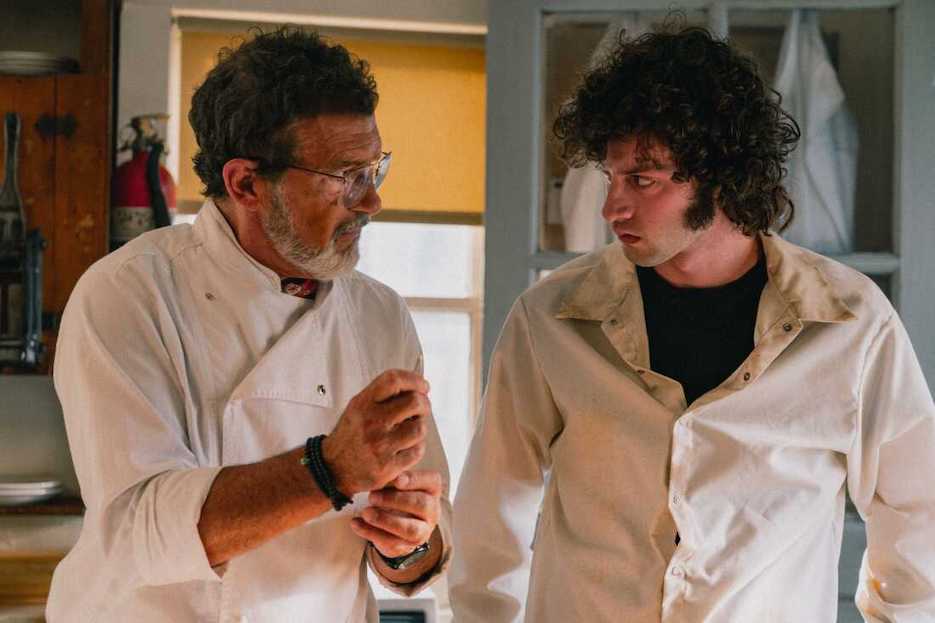
The film's strongest emotional relationship may be the one between Tony and Chef, played by Antonio Banderas.
Banderas gives one of the film's standout performances, bringing charisma, authority, and warmth to the restaurant owner who gives Tony an opportunity when he desperately needs one. Chef recognizes something in this troubled young man, even when Tony's behavior makes that difficult.
Their relationship gradually becomes more than that of an employer and inexperienced young worker. Chef becomes a mentor, although not a sentimental or perfect one. He pushes Tony to take responsibility and confront the consequences of his actions.
Banderas has the kind of screen presence that can easily dominate a film, but here he works particularly well opposite Sessa. Their scenes provide some of the film's emotional grounding, especially as Tony begins to understand that working in a professional kitchen requires discipline, honesty, and commitment.
This is where Tony becomes more than a culinary story. It becomes a story about mentorship and the unexpected people who can help redirect a young person's life.
Banderas understands how to make that relationship feel both entertaining and genuine. His performance adds much of the warmth that makes the film so enjoyable.
A Strong Ensemble
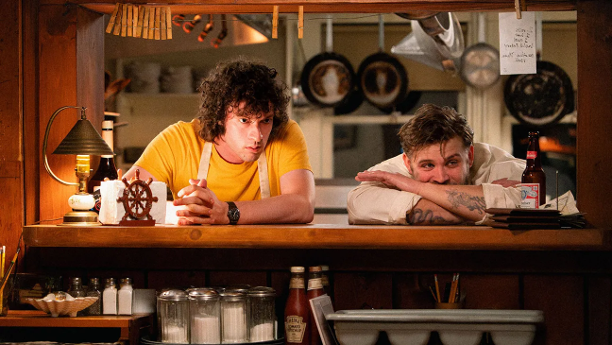
The supporting cast gives the film much of its warmth and energy.
Emilia Jones plays Nancy, Tony's love interest, bringing another emotional dimension to his coming-of-age story. Their relationship becomes complicated by Tony's insecurities and the lies he tells about his future.
If I had one reservation about the supporting characters, it would be Nancy. While Jones gives the role sincerity, I found the romantic storyline somewhat weaker than the film's relationships inside the kitchen. Tony's connection with Chef and the restaurant community feels more emotionally developed, while Nancy sometimes feels as though she is primarily there to move Tony's personal journey forward. I would have liked to see a little more depth and complexity in their relationship.
Dagmara Domińczyk plays Gladys Sacksman Bourdain, while Rich Sommer portrays Pierre Bourdain, giving us a glimpse of Tony's family and the expectations surrounding him.
The restaurant ensemble includes Stavros Halkias as Stavros and Leo Woodall as Sal, two personalities who become part of Tony's introduction to the unpredictable world of professional kitchens. Michael Jibrin plays Tyrone, while Monica Raymund appears as Mary. Caroline Portu plays Robin, Nancy's friend, with Ava Davey-Bissett as Vicki and Elle Shaheen as the Mysterious Woman.
Together, the ensemble creates a restaurant community that feels messy, energetic, funny and occasionally dangerous. These characters give Tony a world in which he can make mistakes, form friendships, fall in love and begin to understand the consequences of his choices.

Food as a Language
Food in Tony is not simply decoration. It becomes a language.
Cooking creates relationships, opens doors, and gives these characters a shared environment in which their personalities and differences can collide. The film understands something fundamental about Bourdain's eventual career: his fascination with food was never solely about food. It was about people.
That is one of the most appealing elements of the film. The kitchen becomes a place of chaos, friendship, conflict, mentorship, and self-discovery. Tony arrives there largely by accident, but the experience ultimately changes the direction of his life.
The Bourdain We Came to Know
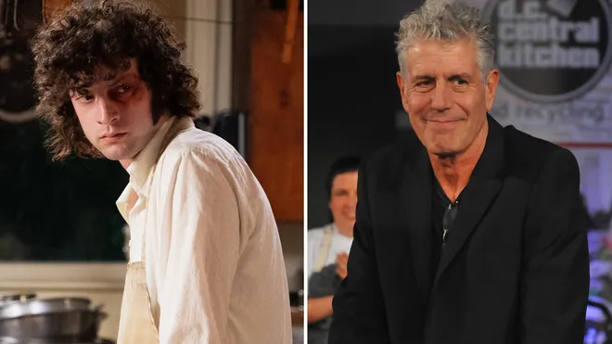
My one little disappointment with Tony is that I wanted to see and hear a little more about the Anthony Bourdain we eventually came to know and love.
The film gives us the young man who is just beginning his journey in the food industry, but it does not really connect that young Tony to the extraordinary traveler, food expert, writer, and storyteller he would eventually become.
Of course, this is partly a creative choice. The filmmakers deliberately focus on one specific chapter of Bourdain's life rather than attempting to make a conventional biography covering his entire career. That restraint is admirable, and I appreciate that the film does not try to squeeze decades of his life into a single movie.
Still, as someone who remembers Bourdain for the person he became, I found myself wishing for just a little more of that future to be present in the film.
Even a few subtle references to the curiosity that would eventually take him around the world, or a stronger sense of the connection between this young kitchen worker and the celebrated traveler and food storyteller, might have added another emotional layer.
Anthony Bourdain eventually transformed the way many people experienced food and travel. Through his television programs, books, and documentaries, he did much more than tell audiences where to eat. He introduced viewers to cultures, communities, and people they might never otherwise have encountered. His curiosity was part of his identity, and his willingness to enter unfamiliar places and listen to people became one of his greatest strengths.
That later Bourdain is almost completely absent here.
For me, that is the film's one small missed opportunity.
At the same time, I understand why the filmmakers made this choice. Tony is about the beginning, not the destination. It wants us to watch a young man discover the kitchen rather than immediately showing us the global culinary icon waiting at the other end of the road.
Perhaps that is why the ending feels slightly bittersweet.
We know what comes next, even if the film does not show us.
And that leaves me wanting more.
Not necessarily another conventional biopic, but perhaps another chapter that follows Bourdain from these early restaurant experiences into the writer, chef, traveler and cultural storyteller he eventually became. Because the young Tony we meet here is fascinating precisely because we know the extraordinary life waiting ahead of him.
A Sweet Ending
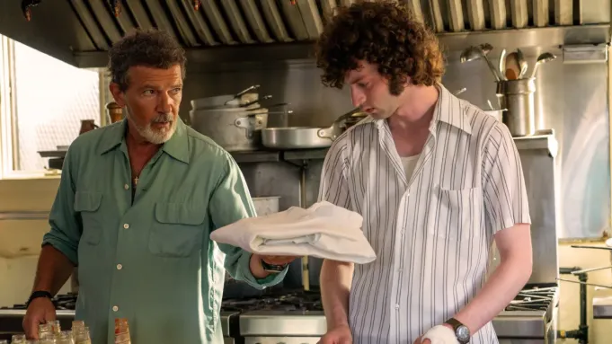
The ending was my favorite part of the story.
Without giving away the details here, there is something genuinely sweet and satisfying about the way Tony's journey comes together. After watching him make mistakes, struggle with his identity, and search for somewhere to belong, seeing him finally begin to understand his direction gives the film an emotional payoff.
It is not an overly dramatic ending. Its strength comes from its simplicity and warmth.
That final feeling is also what made me wish the film had given us just a little more of Bourdain's later life. Tony ends just as the person we know is beginning to emerge. We are left with the sense that this is only the beginning of a much larger story.
I sincerely hope we get to see more of his life in the future.
Not because Tony fails to tell its story, but because it succeeds in making us curious about everything that comes next.
Final Thoughts
Tony is ultimately less interested in the myth of Anthony Bourdain than in the human being before the myth existed.
It is a warm, charming, and heartfelt portrait of a young man discovering that a kitchen can become a place of transformation.
The film benefits from strong performances, particularly Dominic Sessa's nuanced portrayal of a young Bourdain and Antonio Banderas' charismatic presence. The ensemble also gives the restaurant world an energetic sense of community, making the kitchen feel like a living organism rather than simply a setting.
What stays with me most is the idea that extraordinary lives rarely begin with extraordinary certainty.
Sometimes they begin with a young person who is lost, a kitchen that offers a sense of purpose, a few people who believe in him, and the willingness to keep moving forward.
Tony may only show us a slice of Anthony Bourdain's life, but it is a meaningful one. It gives us the beginnings of the man before the legend, and in doing so, finds something deeply human in his story.
Before Anthony Bourdain became a culinary icon, before his books and television programs transformed him into a beloved cultural storyteller, he was simply Tony, a young man in a kitchen trying to find his way.
And perhaps that is exactly where his story needed to begin.

SPOILER ALERT: Full Plot
If you have not seen Tony, stop here and watch the film before continuing. The following section contains major spoilers and explains the story in detail. Sometimes it is easy to miss certain parts of a story, especially when several relationships and events unfold quickly, so this section is intended for readers who have already watched the film and want to revisit the full plot.
In 1975, 19-year-old Anthony "Tony" Bourdain is a college student who dreams of becoming a writer. When a writing opportunity he has been counting on falls through, Tony makes an impulsive decision and heads to Provincetown, Massachusetts, where he hopes to reconnect with Nancy, his former high school crush.
Instead, he finds Nancy involved with someone else and ends up at a local seafood restaurant. After an unfortunate drunken encounter, Tony finds himself without enough money to leave town. He approaches the restaurant's owner, Chef, and claims to have previous kitchen experience in order to get a job.
His first position is as a dishwasher.
What begins as a temporary solution quickly turns into a life-changing experience. Tony becomes fascinated by the restaurant's cooks and the intense camaraderie of the kitchen. He is particularly drawn to Sal, whose confidence and reckless lifestyle make him an exciting presence but also a dangerous influence.
When Sal's personal problems eventually lead to a confrontation with Chef, Tony moves into a cooking position and begins learning the profession more seriously under Chef's guidance.
Meanwhile, Tony continues seeing Nancy while hiding the truth about the writing fellowship and his real reasons for coming to Provincetown. His lies eventually begin catching up with him.
Hoping to impress Nancy, Tony convinces Chef to feature lobster thermidor as a special. The dish initially appears to be a success, but the evening turns disastrous when a grease fire erupts in the kitchen. Tony's attempt to put out the flames only makes the situation worse, and the restaurant suffers devastating damage.
Chef is furious, particularly after discovering that Tony had lied about his previous restaurant experience.
Tony is also forced to confess the truth to Nancy. He admits that he never received the fellowship and that one of the reasons he came to Provincetown was to follow her. The revelation damages their relationship.
With the restaurant destroyed and Tony facing the consequences of his actions, he reconnects with Sal and searches for a way to make money and get back home. But circumstances lead him toward a different solution.
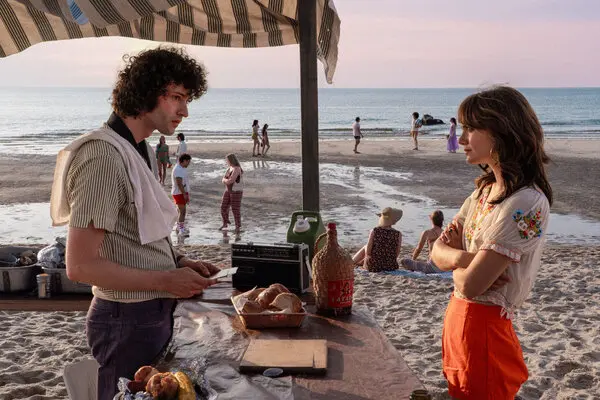
Tony helps organize a clam bake on the beach to raise money for the damaged restaurant. What begins as a practical attempt to help rebuild the Flagship becomes something much more meaningful when Tony sees the people from the restaurant community come together, including Nancy and Chef.
For the first time, Tony recognizes that he has become part of something.
He begins making amends with the people he has hurt. His relationship with Nancy is repaired, and he eventually reconciles with Chef.
Chef rebuilds the restaurant and gives Tony a recommendation for the Culinary Institute of America, offering the young man an opportunity to continue pursuing cooking professionally.
Chef also encourages Tony to embrace the name Anthony.
It is a small but meaningful moment. The young man who arrived in Provincetown uncertain about his future begins to take his first real steps toward the identity the world will eventually recognize.
The film closes on that beginning.
Tony has not yet become Anthony Bourdain, the celebrated author, television host, traveler, and culinary storyteller. But the seeds have been planted.
And perhaps that is the most fitting place for Tony to end: not with the legend, but with the young man who is just beginning to discover him.