15 October
Two First-Place Prizes for Carmen Dilara Bağış in Minerbio 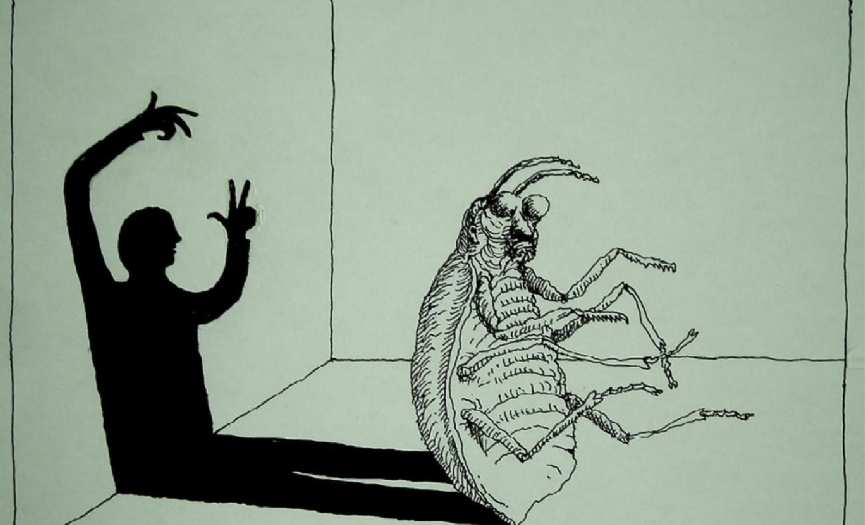
One day a man from the countryside wants to enter a place called the Law. But there is a doorkeeper standing in front of the gate. The doorkeeper tells the man, with a sharp air, that he cannot enter; yet he also notes that the gate is not completely closed.
The man begins to wait.He waits for years. From time to time he tries to obtain permission from the doorkeeper, even offers him bribes, tries to persuade him with questions. Despite all this he never manages to go inside. Very long years pass; the man has almost reached the end of his life, yet he is still waiting in front of the gate for the doorkeeper to let him in.
At last he asks the doorkeeper:“Everyone tries to enter the Law, but how is it that in all these years no one else even attempted to go through this gate?”
The doorkeeper replies: “This gate was meant only for you. I am now going to shut it and leave.”
And the man dies…
These words belong to an independent short tale titled ‘Before the Law’ that appears in Kafka’s immortal novel The Trial.The story tries to describe the helpless condition of the individual in the face of a power that lies far beyond his capacity to move, decide and act. Instead of defying the doorkeeper who will not let him in and attempting to enter, the country man waits for his permission—until the very end of his life.
The man’s tragedy is not merely that the doorkeeper blocks him. The real tragedy is that he accepts waiting in front of the gate. The gate is open, yet the man does not dare to go in.Kafka’s doorkeeper is the state, bureaucracy, the court, authority, society, tradition; even a person’s own fears and traumas. Perhaps the man has been subjected to an inertia—a state of motionlessness—jointly produced by all of these. All his life he has waited for permission.
This short tale is, to a large extent, the narrative of a human being who gives up being the subject of his own life and turns into a creature that waits for permission.
Kafka’s most merciless irony is hidden in the doorkeeper’s last words.The man spends his entire life waiting to enter the gate of the Law; in the end the doorkeeper tells him that the gate had been made only for him all along.The man has perhaps consumed his whole life waiting for permission from someone else in order to obtain something that already belonged to him.
Xxxxxx
Kafka’s helpless and motionless human condition is carried, in the novel "The Metamorphosis", into the house, into the most intimate space, and evolves into the individual’s alienation.
The novel’s protagonist, Gregor Samsa, is a worker who supports his family, yet one morning he wakes from a sleep full of nightmares to find himself transformed into a gigantic insect.
Samsa has been so thoroughly crushed in the gears of the system that what troubles him is not his transformation into an insect, but being late for work.Samsa is at the extreme point of alienation from his own body and, of course, from his soul.Samsa’s transformation represents both a physical and an emotional alienation. His story takes as its centre one of humanity’s most fundamental problems: alienation, being cast into emptiness, lack of belonging, and existential questioning.
Motionlessness and ‘playing the spectator’ acquire a new negative dimension through alienation in The Metamorphosis.
In Before the Law the authority is the doorkeeper. In The Metamorphosis it is this time the father.The writer’s complaint in his work "Letter to His Father", addressed to Hermann Kafka—“In your presence I lost my self-confidence and acquired instead an infinite sense of guilt”—is also the key to his other works.
For Kafka the father is not merely a harsh parent at home; he is the very same majestic doorkeeper who grants no passage in Before the Law, and the merciless system that turns the son into an insect in The Metamorphosis and finally abandons him to death.
In Kafka’s literature, authority creates, beyond alienation, a sense of guilt that can never be paid off. Authority, the system and social pressure drive even the innocent person into a feeling of guilt.
Albert Camus’s ‘stranger’ resembles Kafka’s stranger in a certain sense. Both, by separating themselves from society, try to live their own hells.Kafka describes the hell of alienation; Camus questions how one can live inside that hell.
Kafka’s purpose was not to rebel against the system as to tell the whole world how the system alienates a human being from the world, pushes him into guilt and turns him into an insect.
The famous 20th-century German thinker Walter Benjamin describes Kafka as “a modern sage who discovered nobility and freedom inside defeat.”The constant failure of Kafka’s characters reveals the real situation of modern man. Failure is one of the strongest proofs that shatters the illusion that the system functions perfectly.
According to Benjamin, Kafka does not try to teach us how to win, but how to be defeated while remaining human in a world that crushes us with everything it has.
Yet in this spectacle of ‘defeat’ there is also Kafka’s never-explicitly-revealed hidden message of ‘how to win’.
xxxxxxxx
Today as well, the person who feels worthless among the gears of the gigantic system, who thinks he must constantly work toward a main goal that is not his own, turns from being the subject of his own life into an object of the system.
Like Kafka’s country man he waits for approval at the system’s various gates, or like Gregor Samsa he silently turns into an insect in plazas and in homes.
In this context Kafka’s covert warning is still very valuable today.
As long as today’s victim does not take responsibility for his own will, does not try to pass through those gates, and does not reject the roles that are ready to turn him into an insect, he will have no future other than waiting for the doorkeeper to slam the gate in his face.