14 September
President Erdoğan Extended Greetings for Rosh Hashanah 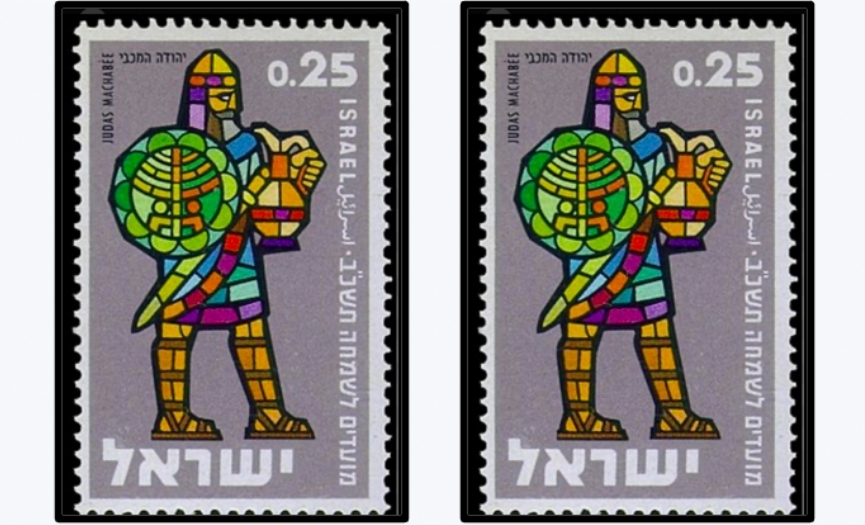
The Earliest Written Sources
The earliest written sources relating to Hanukkah lead us to Alexandria in Egypt. Founded by Alexander the Great, the city came under the control of one of his four generals, Ptolemy—founder of the Ptolemaic dynasty—following Alexander’s death in 323 BCE.
It is well known that this ruler, the founder of the legendary Library of Alexandria, commissioned the translation of the Torah into Greek for the purposes of the library. According to tradition, this translation was carried out by seventy scholars and is known as the Septuagint (the Translation of the Seventy).
This fact attests to the existence, at that time, of a substantial Jewish community in Alexandria. It is also known that the Jews of Alexandria rapidly integrated into the surrounding society and adopted Greek as their cultural language.
It was within this context that the Jewish uprising which broke out in Judea around 164 BCE—then under the domination of the Seleucids, successors of Seleucus, another of Alexander’s generals—was recorded in a work entitled “I Proti Makkaveon”, that is, the First Book of the Maccabees. It is generally accepted that this text was translated from Hebrew into Greek between 140 and 100 BCE.
A Curious Paradox
Hanukkah commemorates the defeat of the Seleucid attempt to impose Hellenistic culture, the rededication of the Temple in Jerusalem, and the restoration of Jewish autonomy. However, since these events occurred after the fixation of the Hebrew Bible canon—completed in the 5th century BCE—Hanukkah does not appear among the “canonical” Jewish festivals, that is, those officially recognized by Scripture.
This situation reveals a discord between the Jewish political authorities of the time and religious institutions, generating a discursive tension between historical narrative and religious narration.
The most detailed account of the Maccabean revolt did not reach us through rabbinic Judaism, but through Greek-language Jewish texts that were later adopted and preserved by Christianity. The conscious reactivation of this historico-national narrative only truly took place in the era of modern Zionism.
Jewish History Written in Greek: The First Book of the Maccabees
The foundational historical narrative of Hanukkah is presented chronologically in the First Book of the Maccabees. The text opens with the religious edicts promulgated under the reign of the Seleucid king Antiochus IV, continues with the revolt initiated by Mattathias and his sons, describes the military leadership of Judah Maccabee, and culminates in the reconquest and rededication of the Temple.
The account concludes with the attainment of political autonomy by the Hasmonean dynasty, descended from the family of the Maccabees.
Significantly, the miracle of the cruse of oil that burned for eight days does not appear in this text. Hanukkah is presented not as a miraculous commemoration, but as a historical celebration grounded in armed resistance, leadership, and national reconstruction.
Exclusion from the Hebrew Religious Canon
Although of Jewish origin, the First Book of the Maccabees was not incorporated into the Hebrew canon during the formation of rabbinic Judaism following the destruction of the Temple in 70 CE. Among the reasons cited are the fusion of priesthood and kingship in a single person, the progressive corruption of the Hasmonean dynasty, and the increase in intra-Jewish violence.
Added to this was a theological reluctance toward a model of Jewish sovereignty founded on force and arms. As Jewish political existence was reduced to a vassal status under Roman domination, religious authorities preferred to relegate the historical narrative to the background and shift the emphasis toward miracles and divine intervention. This orientation may be interpreted as a necessity imposed by the circumstances of the time.
Christian Adoption and Preservation of the Historical Narrative
What rabbinic Judaism set aside, the Christian tradition preserved. The First and Second Books of the Maccabees, incorporated into the Septuagint—a Greek-language Jewish corpus widely disseminated in the Hellenistic world—were included in the biblical canon of the Catholic and Eastern Orthodox Churches.
This situation gives rise to a striking historical irony: Christianity preserved a Jewish narrative of national liberation that rabbinic Judaism had consciously marginalized. Without the Christian manuscript tradition, the figure of Judah Maccabee and the detailed account of the revolt might have disappeared entirely.
What Did Rabbinic Judaism Do?
Rabbinic Judaism did not reject Hanukkah; it redefined it. The question posed in the Talmud, Tractate Shabbat 21b—“What is Hanukkah?”—perfectly illustrates this approach. The answer omits wars and military leaders and focuses exclusively on the miracle of the oil.
The name of Judah Maccabee is not mentioned, the Hasmoneans vanish from the narrative, and the revolt ceases to be a political event, becoming instead a theological account.
This reconfiguration sought to privilege divine providence over human action, to neutralize models of Jewish sovereignty deemed problematic, and to adapt Hanukkah to a diasporic existence devoid of a military dimension. Thus, Hanukkah became largely detached from its historical context and survived not through canonical sanctity, but through celebration and tradition.
Zionism and the Return of Judah Maccabee
Modern Zionism consciously reversed this rabbinic orientation. From the late nineteenth century onward, Zionist thinkers and educators explicitly relied on the First Book of the Maccabees to rehabilitate Judah Maccabee as a Jewish national hero.
While the miracle of the oil was retained, the revolt was once again placed at the center of the narrative. Judah Maccabee became, in youth movements, education, public culture, and the Maccabiah Games, the antithesis of the “passive” Jewish model associated with the diaspora.
In Summary
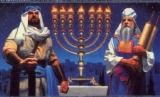
Today, Hanukkah simultaneously bears two parallel legacies: on the one hand, a religious approach emphasizing light, miracle, and divine deliverance; on the other, a historico-national reading highlighting insurrection, leadership, and sovereignty.
From Greek Jewish historiography to Christian preservation, from rabbinic transformation to Zionist revival, Hanukkah has traveled a long and complex path.