23 October
Yakacık in Jewish Memory: From Wartime Fear to a Place of Tranquility 
Esra Akkaya, who lives in Germany, completed her doctorate at Freie Universität Berlin with the support of the Ernst Ludwig Ehrlich Studienwerk and the Ursula Lachnit-Fixson Foundation, and in collaboration with the Selma Stern Berlin-Brandenburg Center for Jewish Studies. She was previously a fellow of the Martin Buber Society of Fellows at the Hebrew University of Jerusalem.
What does literature mean to you personally?
I think literature gives us the opportunity to access stories and histories we don't know. It doesn't have to be directly didactic like in school; rather, through literary texts, we can learn about the experiences of others. This helps us develop empathy and understanding. I believe that literature can broaden everyone's horizons. Because literature always moves in tandem with language. But it doesn't matter whether we read a text in its original language or as a translation; literature can have an impact beyond languages and countries.
What drew you to studying Turkish-Sephardic Jewish literature?
Initially, I was researching how the Spanish Civil War was addressed in literary texts from Turkey. I was working on the perception of the Spanish Civil War in Turkish art and literature. I happened to be in Istanbul at the time; I came across an article in an old issue of the Şalom newspaper mentioning a poem by Beki L. Bahar. The poem contained a reference to the Spanish Civil War. Then one text led me to another, and suddenly I discovered Beki L. Bahar's vast literary world. I was truly impressed and immediately felt that I had a treasure before me.
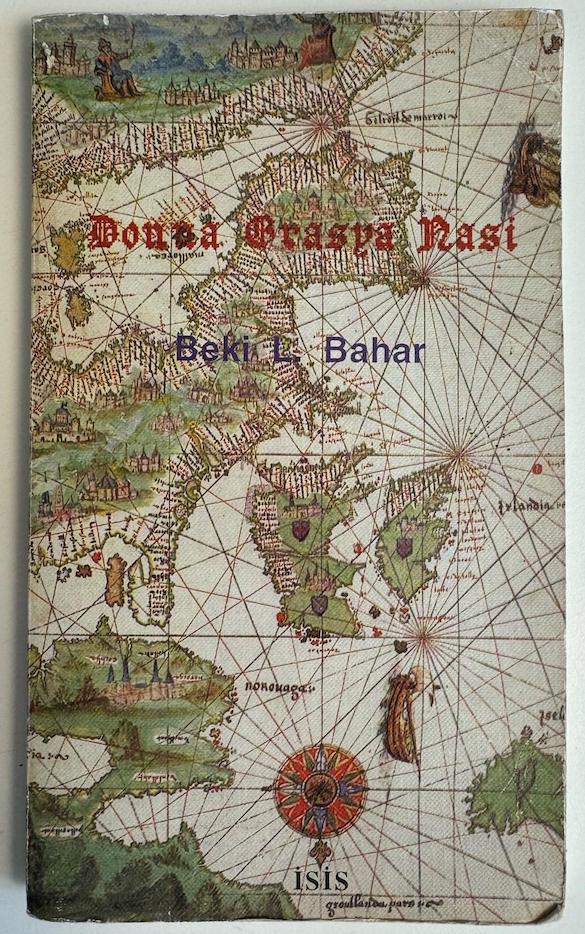
Donna Grasya Nasi by Beki L. Bahar
Could you tell us about Beki L. Bahar's work from your research?
Beki L. Bahar was a very important and prolific writer. Her works include essays, travel writings, plays, and poems. Her poem, "Ezan, Çan, Hazan," which is almost forgotten today, was written in 1992 to commemorate the 500th anniversary of the expulsion of Jews from the Iberian Peninsula and their acceptance into the Ottoman Empire. In my opinion, this poem is like a vow written to Istanbul; to a city of many languages, cultures, and diverse communities living together… This pluralistic sense of belonging is very strong in Beki L. Bahar's works as well. There is a perspective that embraces both Turkish history and Jewish history simultaneously. Her works sometimes feel like a message in a bottle left in the sea. In times when nationalist and exclusionary understandings of belonging are gaining strength again, they remind us of reason, humanity, and the idea of living together. Beki L. Bahar considered herself committed to the values of enlightenment and modernity, understanding them as an important part of Turkish history. Therefore, I believe her works should be known not only in academic research but also by a wider readership. Beki L. Bahar holds a very special place in my research.
Who are the other names in Turkish Sephardic literature you are researching?
Actually, there are many names. I am also working with authors and texts that have not yet been published. Apart from Beki L. Bahar, I am particularly impressed by Lina Cohen Albukrek's Ladino poems and Salomon Bicerano's Ladino texts.
Where do you find the resources for your research?
Many things really do happen by chance. During my time in Istanbul, I found very important resources in secondhand bookstores. I think secondhand bookstores are very special places in Istanbul; often the owners know a lot, almost like encyclopedias. Besides that, I also work in archives. The most productive archive visit was last year in New York. The American Sephardi Federation, located within the Center for Jewish History in Midtown, has a very valuable archive. I found previously unpublished resources; I transcribed them and am now working on translations.
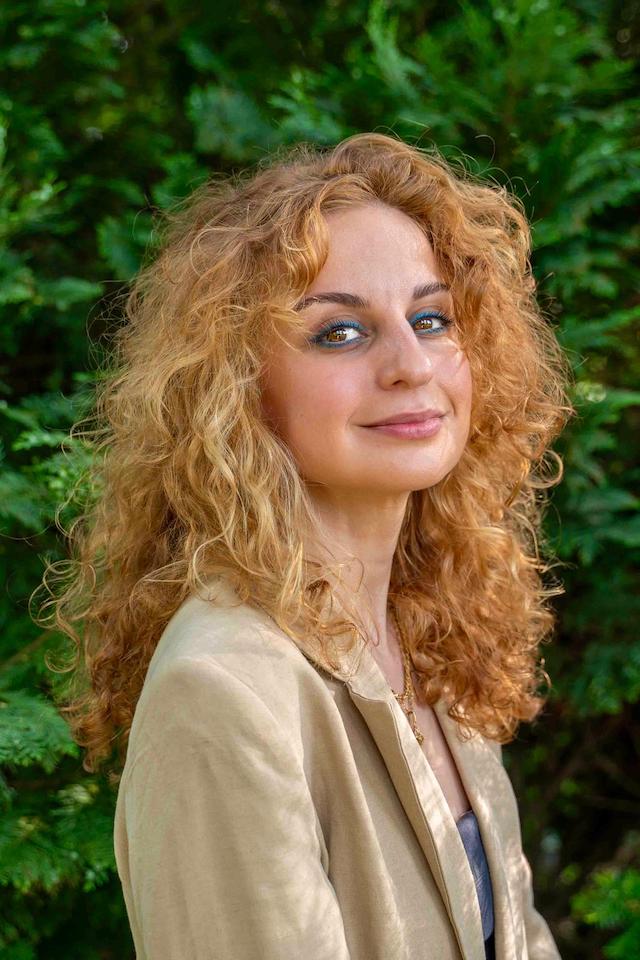
Photo by Duygu Atçeken
Could you provide information about your new book and the process involved in researching the history of Sephardic literature in Turkey during the 20th century?
During my research, I realized that Sephardic literature in Turkey encompasses many different genres and periods. I compiled a selection of articles, memoirs, plays, and poems. Each of these texts represents a different historical period of the Sephardic experience in Turkey. Therefore, I began writing a history of Sephardic literature in Turkey based on these multilingual texts. After transcribing the manuscript sources I found in the archives, I am now in the translation process. I also plan to publish some texts as an appendix to the book or as a separate publication. I hope that this book on the history of Sephardic literature in Turkey will be published in English within the next two years.
Why is Turkish-Sephardic Jewish history and literature so important in your view? What makes this field so urgent today? What stories do we miss when we ignore this literary tradition?
I am a researcher working in the field of comparative literature. This means that I don't read literature only within national borders. I am particularly interested in literature that doesn't focus on identity or essentialism, but rather on plurality and coexistence.
The Sephardic experience has been shaped by (forced) migrations. Therefore, it carries within it many languages, geographies, and cultures. We can see this very clearly in Turkish Sephardic literature. In these texts, many languages, many cultures, many communities, and many histories come together. This diversity is not artificial; it arises directly from historical experiences. But unfortunately, we often forget or ignore these experiences. When we ignore this literary tradition, we also miss an important part of Turkey's multilingual and multicultural history.