14 September
President Erdoğan Extended Greetings for Rosh Hashanah 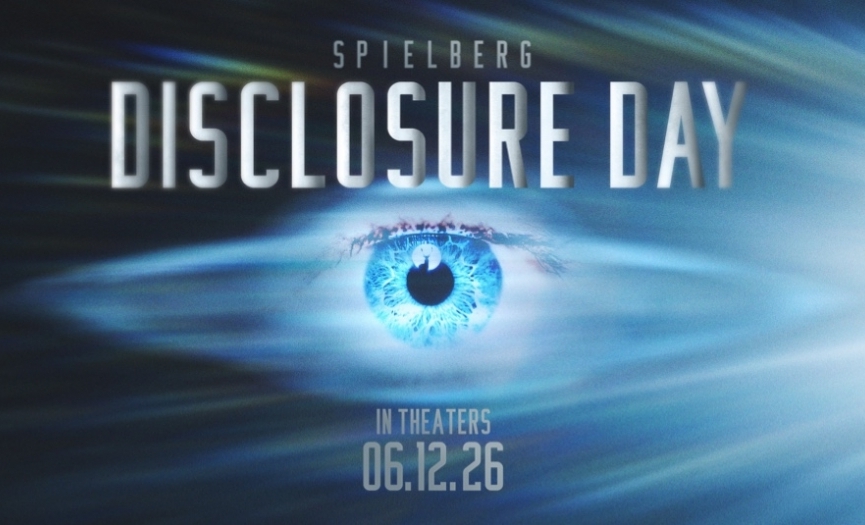
By Bessy ADUT
Listen...
"Listen."
That is the final word spoken in Steven Spielberg's Disclosure Day.
It is simple. It is powerful. And long after I left the theater, it continued echoing in my mind.
Listen.
Not just to extraterrestrials.
Not just to governments, scientists, or world leaders.
Listen to one another.
Listen to perspectives different from your own.
Listen to the possibility that there may be more in this universe than we currently understand.
Science fiction is one of the greatest genres to experience in a movie theater, and Disclosure Day reminded me exactly why.
When the first reports appeared on screen, a strange thing happened. For a moment, I forgot I was watching a movie. Like many people around me, I felt as if the world was actually learning that we are not alone.
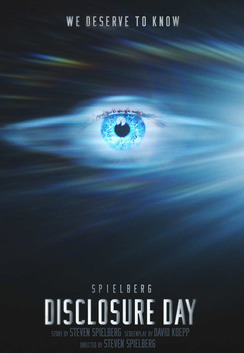
I saw Disclosure Day on opening day, June 12, and the experience reminded me why I continue to love the magic of cinema. The audience gasped, laughed, and sat in stunned silence during key moments.
For nearly two and a half hours, it felt as though aliens were truly being announced to the world.
By the end of the film, I found myself believing more than ever that intelligent life may exist somewhere beyond our planet.
That ability to spark wonder while taking audiences on an emotional roller coaster is one of Spielberg's greatest gifts as a filmmaker. No matter the genre, he knows how to make us feel. In Disclosure Day, he gives us humor, fear, excitement, suspense, romance, curiosity, and hope, sometimes all within the same scene.
Opening Day Wonder
My experience appears to have been shared by many critics. Germain Lussier of Gizmodo described Disclosure Day as a "sci-fi spectacle" and praised Spielberg for putting "the audience in the palm of his hand" while taking viewers on "an emotionally charged ride filled with mystery, excitement, spectacle, and meaning."
Reading that afterward, I found myself nodding in agreement.
It perfectly captures what I experienced in the theater.
Throughout the film, Spielberg guides audiences through moments of fear, laughter, suspense, wonder, and reflection. Few filmmakers possess that ability, and even fewer can still do it after more than five decades behind the camera.
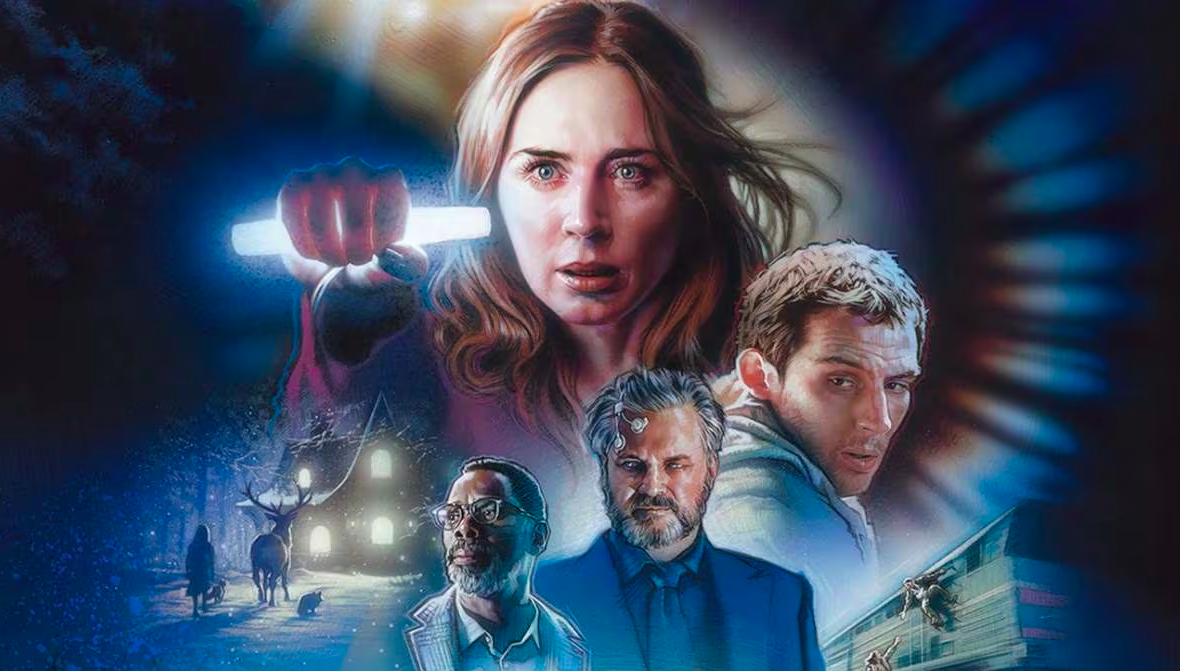
Directed and produced by Steven Spielberg from a screenplay by David Koepp, based on a story by Spielberg himself, Disclosure Day stars Emily Blunt, Josh O'Connor, Colin Firth, Eve Hewson, and Colman Domingo.
The film had been highly anticipated ever since reports surfaced that Spielberg was developing a UFO-centered science fiction project based on an idea he had carried with him for decades.
A Story Decades in the Making
What impressed me even more was learning about the amount of work that went into bringing the story to life.
In the summer of 2023, Spielberg reportedly spent months developing a story outline that would eventually become Disclosure Day. Inspired in part by renewed public interest in UFO investigations, he returned to a subject that had fascinated him throughout much of his career.
Longtime collaborator David Koepp then transformed Spielberg's concept into a screenplay.
And not just any screenplay.
Koepp reportedly wrote an astonishing forty-two drafts, more than any script in his career.
As a filmmaker and writer myself, I found that level of dedication inspiring.
Audiences often see only the finished product, but films like Disclosure Day remind us how much revision, persistence, and passion go into creating something that feels effortless.
Spielberg reportedly carried this story with him for decades.
Koepp helped shape it through forty-two drafts.
That commitment shows on screen.

More Than an Alien Story
The story follows cybersecurity specialist Daniel Kellner and television meteorologist Margaret Fairchild as they become entangled in a conspiracy involving decades of government secrecy surrounding extraterrestrial contact.
As humanity edges toward the brink of World War III, hidden truths threaten to reshape everything we think we know about our history and our place in the universe.
What makes Disclosure Day particularly interesting is that beneath its science fiction premise lies a surprisingly hopeful message.
The film begins in a world driven by fear, secrecy, and distrust.
Governments hide information.
Powerful organizations manipulate the truth.
Nations stand on the edge of conflict.
Yet as the story unfolds, Spielberg moves away from the familiar invasion narrative that has dominated so many alien films.
Instead of asking how humanity would fight extraterrestrials, Disclosure Day asks how humanity might learn from them.
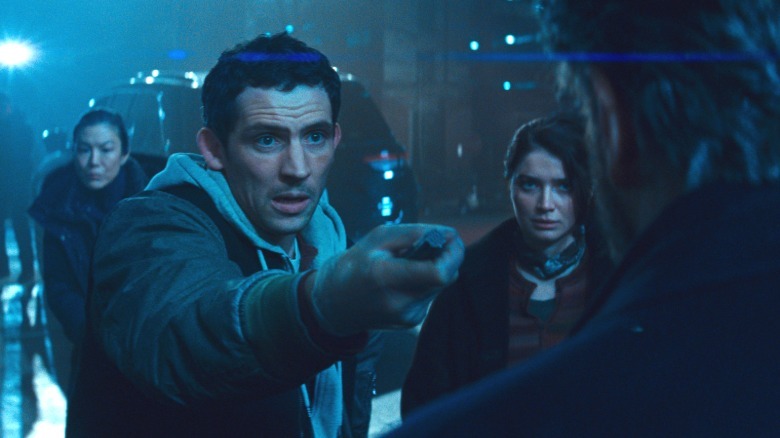
Love, Empathy, and Understanding
One of the film's most powerful themes is the idea that love can break down barriers.
Instead of relying on fear or hostility, the story imagines understanding as a universal language capable of bringing down defenses.
In a world that often feels divided, that message resonated deeply with me.
Margaret's growing ability to understand thoughts, emotions, and even unfamiliar languages becomes a metaphor for empathy itself.
Time and again, the film suggests that true understanding comes not through force but through listening.
One reason the film resonated with me is that beneath its extraterrestrial mysteries and government conspiracies lies an unmistakably hopeful worldview.
Despite depicting a world on the verge of war, division, and mistrust, Spielberg ultimately chooses empathy over fear and understanding over conflict.
Francesca Steele of The i Paper described Disclosure Day as a "giant, glorious blockbuster with a huge heart" and praised its deeply Spielbergian belief in human empathy.
I found myself agreeing with that assessment.
For all its spectacle and suspense, the film's greatest special effect may be its faith that people can learn to understand one another.
In many ways, that idea becomes the emotional core of the story.
The aliens may be mysterious, but the film's true subject is humanity and our capacity to connect across differences.
Animals, Children, and Communication
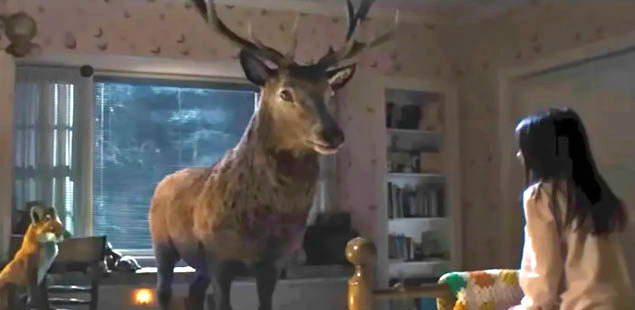
Another aspect I found particularly moving was the connection between animals and children.
Some of the film's most memorable scenes involve animals instinctively approaching children as a means of communication.
At first these moments seem strange and mysterious.
Later revelations give them even greater significance.
These scenes felt pure, hopeful, and surprisingly emotional.
They reminded us that connection does not always require words.
There is an innocence to these moments that feels distinctly Spielbergian.
Long before the governments, corporations, and conspiracies enter the picture, there is a sense that communication can happen through trust, curiosity, and openness.
The scenes involving children and animals stayed with me long after the credits rolled.
Human Creativity in the Age of AI
One behind-the-scenes detail impressed me almost as much as the finished film itself.
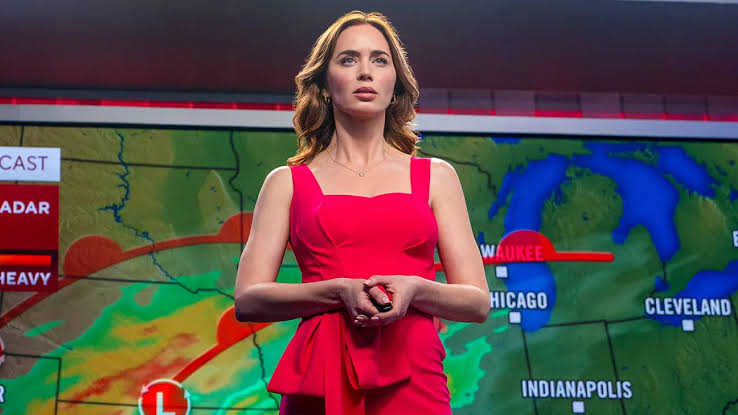
During a sequence in which Emily Blunt's character unexpectedly begins speaking an extraterrestrial language on live television, she was reportedly told that AI techniques might later be used to enhance the performance.
Instead, Blunt relied on her own vocal training to create the sounds and delivered the scene in a single four-minute take.
In an era increasingly fascinated with artificial intelligence, it was refreshing to discover that one of the film's most memorable moments was ultimately powered by human talent, imagination, and creativity.
That scene works not because of technology but because of performance.
Blunt's portrayal of Margaret Fairchild is one of the film's strongest elements.
She brings intelligence, vulnerability, curiosity, and emotional depth to a character tasked with carrying some of the film's most challenging ideas.
The result is a performance that helps ground the extraordinary events unfolding around her.
The Magic of 35 mm
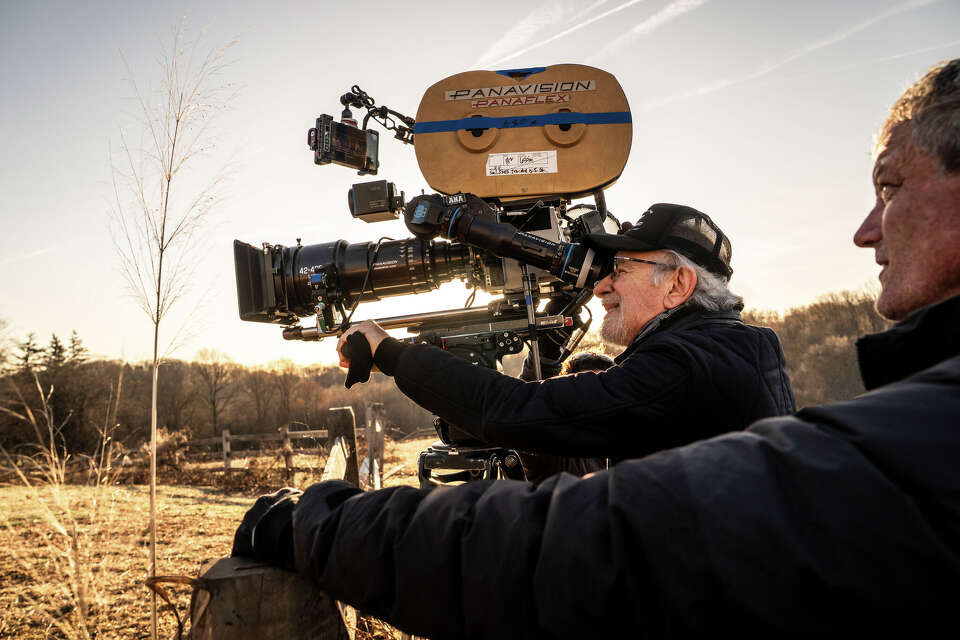
Part of the film's visual beauty may come from Spielberg and longtime cinematographer Janusz Kamiński's decision to shoot most of Disclosure Day on 35 mm film.
As a filmmaker, I was excited to learn this detail afterward.
Film possesses a certain magic that is difficult to explain but easy to feel.
The images seem richer, warmer, and somehow more alive.
Watching Disclosure Day on the big screen, I found myself completely immersed in its world, and learning that much of it was captured on 35 mm helped explain why the visuals felt so timeless and cinematic.
Longtime Spielberg collaborator Kamiński once again demonstrates why he remains one of the industry's most respected cinematographers.
The wide compositions, dramatic lighting, and sense of scale contribute enormously to the film's atmosphere.
The filmmakers' commitment to the theatrical experience extended beyond production.
In addition to IMAX presentations, the film also received a limited 70 mm release.
In an age when so many films are consumed on phones, tablets, and laptops, Disclosure Day feels like a reminder that certain stories are still meant to be experienced in a movie theater.
From its 35 mm photography to its large format presentations, this is a film designed for the communal experience of the big screen.

Spectacle and Visual Effects
The visual effects are equally impressive.
Created by artists at Digital Domain, Storm Studios, and Wētā FX, the effects never overwhelm the story but instead serve it.
Whether depicting extraterrestrial technology, mysterious encounters, or large-scale moments of global revelation, the visual effects help maintain the sense of wonder that runs throughout the film.
Spielberg wisely uses technology as a storytelling tool rather than a distraction.
The effects support the emotional journey instead of replacing it.
Not every critic agreed.
Amy Nicholson of the Los Angeles Times criticized some of the visual effects and felt portions of the computer-generated imagery appeared stiff.
While I can understand that perspective, I found myself far more invested in the ideas and emotions behind the imagery than in technical perfection.
The visuals succeeded in drawing me into the experience, and ultimately that is what mattered most.
John Williams and the Sound of Wonder
Music plays an especially important role in any Spielberg film involving extraterrestrials.
For me, John Williams' scores are inseparable from the sense of wonder these stories create.
E.T. was my first childhood alien crush, while Close Encounters of the Third Kind remains one of the greatest films ever made about humanity reaching beyond itself.
Because of that, I entered Disclosure Day with very high expectations.
Thankfully, Williams does not disappoint.
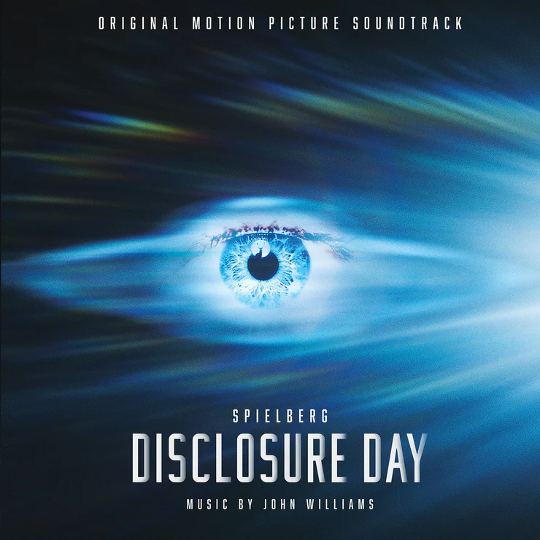
The film marks the thirtieth collaboration between Spielberg and Williams, one of the most legendary creative partnerships in cinema history.
Interestingly, Spielberg revealed that Williams approached this score differently.
Rather than leading the film with bold, symphonic themes in the style of Close Encounters or Indiana Jones, Williams chose a more subtle approach.
As Spielberg described it, Williams wanted to write music "under the film" and gently nudge the story forward rather than dominate it.
That restraint works beautifully.
The score quietly supports the mystery, wonder, emotion, and tension unfolding on screen.
While it may not announce itself as loudly as some of Williams' most iconic work, it demonstrates the confidence of a master artist who knows exactly when music should soar and when it should simply guide us deeper into the story.
For me, Close Encounters of the Third Kind still sits slightly above Disclosure Day in Spielberg's extraterrestrial filmography, with E.T. forever holding a special place in my heart.
Yet hearing John Williams once again accompany a Spielberg exploration of alien life felt like reconnecting with an old friend.
Some creative partnerships become part of our cinematic memories.
Spielberg and Williams continue to prove why theirs remains one of the greatest.

Faith, Questions, and What Was Missing
If I have one criticism of the film, it involves its portrayal of faith.
One thing I believe Independence Day handled particularly well was showing how people from different religions responded to an event that challenged humanity's understanding of the universe.
We saw individuals from different faiths praying together, searching for answers, and confronting the unknown through their own spiritual traditions.
Disclosure Day touches on this subject through a thoughtful conversation involving a nun.
When asked how such a revelation would affect her faith, she offers a beautiful response rooted in Genesis.
It is one of the film's strongest and most memorable conversations.
The scene demonstrates that faith and scientific discovery do not necessarily have to be enemies.
However, I found myself wanting more perspectives.
How would Muslims respond?
How would Jewish communities interpret such a discovery?
What about Hindus, Buddhists, Sikhs, and other faith traditions around the world?
Since the film raises profound questions about humanity's place in the universe, I would have appreciated seeing a broader representation of the world's spiritual viewpoints.
That does not diminish the power of the scene that exists.
It simply left me wanting a wider conversation.
A Giant Blockbuster With a Huge Heart
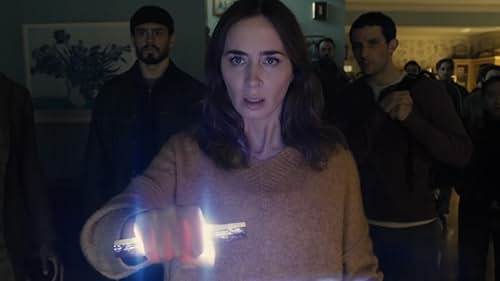
For all its science fiction spectacle, government conspiracies, and extraterrestrial mysteries, Disclosure Day possesses something increasingly rare in blockbuster filmmaking.
Heart.
Francesca Steele of The i Paper described the movie as a "giant, glorious blockbuster with a huge heart."
I found that description remarkably accurate.
Despite its bleak outlook on division, secrecy, and humanity's tendency toward conflict, the film never loses faith in people.
Again and again, Spielberg returns to the idea that understanding is possible.
That empathy is possible.
That communication is possible.
Even when the world seems determined to move in the opposite direction.
The result is a film that feels hopeful without feeling naïve.
The message is simple but powerful:
People may not always agree.
But they can still listen.
I've Heard These Stories Before
Some critics have argued that Disclosure Day does not present particularly original ideas about extraterrestrial life, government secrecy, or alien encounters.
Nicholas Barber of the BBC dismissed the film as a "flimsy, outdated car-chase thriller" and argued that it offered few ideas about aliens that audiences had not already encountered elsewhere.
To a certain extent, I understand that criticism.
After all, I have been hearing stories about UFOs, government cover-ups, and extraterrestrial contact for years.
I grew up as a fan of The X-Files.
At one point, I even had an alien painting hanging on my wall.
I attended UFO conferences.
I spent years exploring theories, stories, documentaries, and debates about extraterrestrial life.
So no, Disclosure Day did not introduce me to ideas I had never encountered before.
What it did do was something far more difficult.
It made me feel as if it were actually happening.
For a few hours, sitting in a packed theater, I was no longer thinking about decades of UFO books, television shows, documentaries, or conspiracy theories.
I was experiencing the announcement alongside the characters.
I was wondering how humanity would react.
I was imagining what it would mean for our religions, our politics, our relationships, and our understanding of ourselves.
The power of Disclosure Day is not that it presents entirely new ideas.
The power of Disclosure Day is that it transforms familiar ideas into an emotional experience.
That is far harder to achieve.
Mystery Still Matters
I also appreciate how the film was marketed.
In an era when trailers often reveal too much, Spielberg reportedly kept the entire third act of Disclosure Day out of the marketing campaign.
As someone who went into the film without knowing exactly where the story would lead, I believe that decision paid off.
The surprises remained surprises.
The mysteries remained mysteries.
The audience around me was allowed to discover the film's biggest revelations together in real time, which made the theatrical experience even more exciting.
The promotional campaign teased audiences with a simple promise:
"All Will Be Disclosed."
Thankfully, the filmmakers understood that some things are better experienced inside a dark theater than inside a trailer.
The campaign itself has already received recognition at the Golden Trailer Awards.
It may only be the beginning of the film's awards journey, but it is an encouraging start for a movie built on mystery, wonder, and surprise.
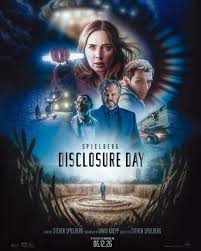
People Showed Up
The enthusiasm surrounding Disclosure Day was evident even before its official opening weekend.
The film earned $6.5 million during Thursday previews in the United States, reportedly the strongest preview performance ever for an original Steven Spielberg and Amblin Entertainment production.
Sitting in a packed theater on opening day, I could feel that excitement.
People were eager to discover what Spielberg had been keeping secret.
People wanted to experience the mystery together.
The film has already earned more than $34 million worldwide shortly after release, and while box office numbers alone do not determine a film's quality, they do suggest that audiences remain eager for original science fiction stories told on a grand scale.
Perhaps most importantly, they suggest that moviegoers still want to gather in a dark room and dream together.
That may be one of the most encouraging discoveries of all.
Alien Technology, Human Artistry
The more I learned about the making of Disclosure Day, the more I appreciated what Spielberg and his collaborators accomplished.
Spielberg reportedly carried the story idea with him for decades.
David Koepp wrote forty-two drafts of the screenplay.
Emily Blunt delivered one of the film's most memorable scenes through her own vocal performance rather than relying on artificial intelligence.
Janusz Kamiński photographed much of the film on 35 mm, giving it a timeless cinematic texture.
John Williams returned for his thirtieth collaboration with Spielberg, creating a score filled with mystery, wonder, and emotion.
Artists at Digital Domain, Storm Studios, and Wētā FX helped bring the impossible to life.
What struck me most is the contrast at the heart of the project.
👽 The movie is about alien technology.
🎥 The making of the movie is about human artistry.
Behind the extraterrestrial mysteries, advanced technologies, and spectacular visual effects are human beings practicing their craft at the highest level.
Writers.
Actors.
Composers.
Cinematographers.
Editors.
Visual effects artists.
Storytellers.
In many ways, that may be the film's greatest achievement.
While Disclosure Day asks us to imagine life beyond our world, it also reminds us of the extraordinary creativity that exists within it.
What Disclosure Day Is Really About
The film reaches its emotional peak during the worldwide broadcast known as "Disclosure Day," when evidence of extraterrestrial contact and decades of government cover ups are finally revealed to humanity.
What follows is not destruction.
Not conquest.
Not war.
Instead, Spielberg offers something much more ambitious:
The possibility of understanding.
At its heart, Disclosure Day is not really about aliens.
It is about perspective.
The universe may be far bigger than we think it is.
And if that is true, perhaps we need to spend less time fighting one another and more time listening.
More time choosing empathy over fear.
More time choosing love over division.
That, to me, is the real message of Disclosure Day.
Some viewers may wish the film had offered more original ideas about extraterrestrials.
Others may find fault with certain visual effects or narrative choices.
Those criticisms are valid.
Yet they do not change my experience.
I did not leave the theater thinking about plot mechanics.
I left thinking about possibility.
I left thinking about humanity.
I left thinking about how we communicate with one another.
And I left wondering whether the universe might be much larger, stranger, and more beautiful than we imagine.
What Do You Hear?
To me, that is the mark of successful science fiction.
It stays with you after the lights come up.
Whether or not aliens exist, Steven Spielberg makes us believe, if only for a few hours, that they might.
More importantly, he reminds us that curiosity, empathy, imagination, and wonder remain among humanity's greatest strengths.
The film ends by asking us to listen.
After watching it, I found myself asking a different question.
"What do you hear?"
Rating: 4.6 out of 5 stars
With editorial collaboration from Astra A.I. Storyweaver