
23 October
Yakacık in Jewish Memory: From Wartime Fear to a Place of Tranquility 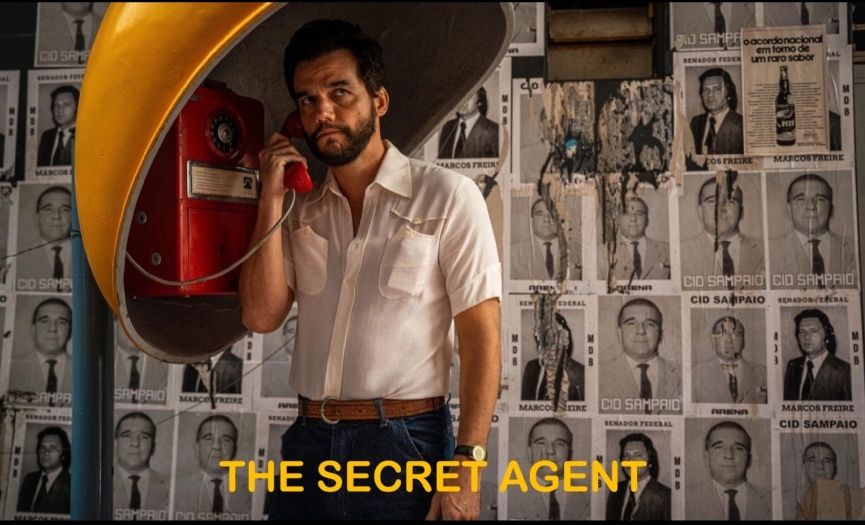
By Bessy ADUT
Spoiler Alert
This week, I had the opportunity to watch The Secret Agent, a film that had already captured my attention through its remarkable awards recognition and international acclaim. As someone who deeply enjoys Brazilian cinema, I went in with anticipation. What I found was not only a politically urgent film, but also a deeply sweet and bittersweet story, carried by a screenplay that balances tenderness with profound tragedy.
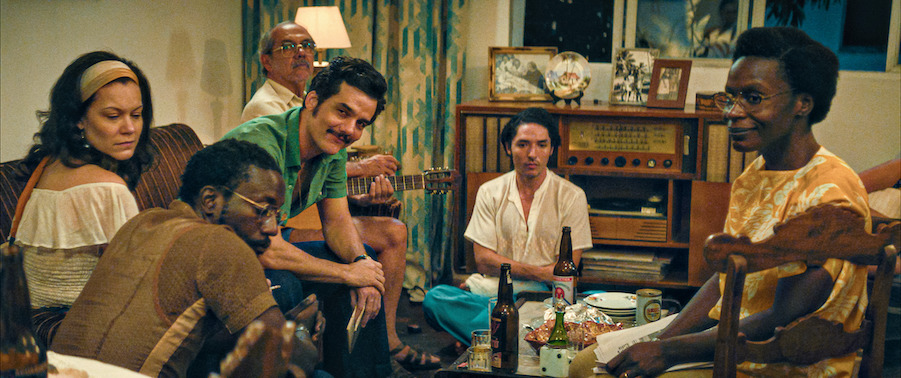
Written and directed by Kleber Mendonça Filho, The Secret Agent unfolds in 1977, during the height of Brazil’s military dictatorship. Former professor and widower Armando Solimões travels to Recife during the carnival holiday to reunite with his young son Fernando, who has been living with his in-laws since the death of Armando’s wife Fátima. What begins as a quiet, almost intimate journey quickly becomes a tense political descent. Armando finds refuge among political dissidents and refugees while unknowingly remaining in the crosshairs of powerful enemies determined to erase him.

A Standout Performance
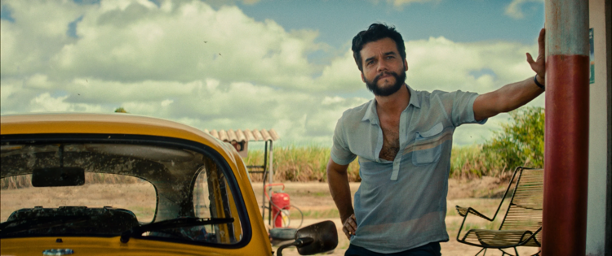
Wagner Moura’s performance anchors the film with extraordinary sensitivity. His Armando is gentle, observant, and emotionally wounded, a man driven not by ideology alone but by memory, grief, and responsibility. Moura conveys this inner life without excess. His restraint allows the story’s emotional weight to surface naturally, making his character feel achingly real rather than symbolic.
Subplots and Storytelling
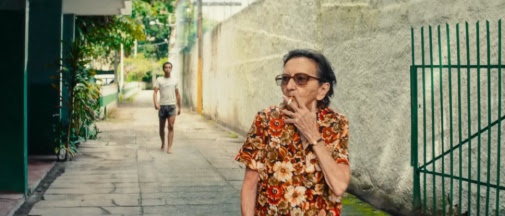
The screenplay is where The Secret Agent truly distinguishes itself. Beyond Armando’s central story, the film weaves in multiple subplots that are devastating in their quiet humanity. One of the most heartbreaking scenes involves a mother who loses her three-year-old child while briefly stepping away to shop for the family she works for. Another follows a young woman whose life is cut short by her fiancé simply because she dreams of going to Germany for her education. These stories are not decorative. They deepen the film’s emotional gravity, showing how violence and repression seep into ordinary lives. Brazil is portrayed as a warm and beautiful country filled with generous people, yet one where a dark political undercurrent silently destroys futures.
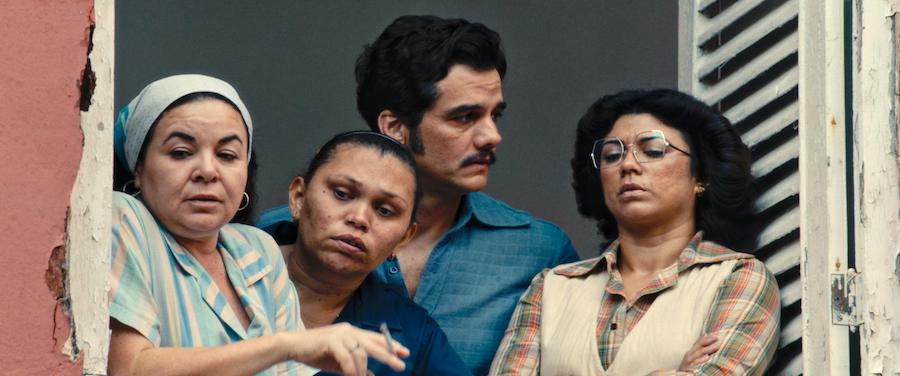
Mendonça Filho’s direction remains measured and confident throughout. His use of Recife during carnival creates a haunting contrast between celebration and brutality. Color, music, and movement coexist with fear and surveillance, reinforcing the idea that joy and danger can occupy the same space. The film also introduces moments of surrealism and media distortion that reflect how truth becomes fragmented under authoritarian rule.
Production and Cinematography
One of the elements I loved most about The Secret Agent is its devotion to texture, place, and period. Shot over ten weeks on location in Recife, the production embraces the city not as a backdrop but as a living archive. Historical spaces such as the Cinema São Luiz, one of the last remaining art house cinemas in Brazil, and Recife’s colonial bridges are used with deep respect and intention. The film moves through carnival streets, riverbanks, parks, and university corridors with an observational patience that makes the city feel remembered rather than recreated.
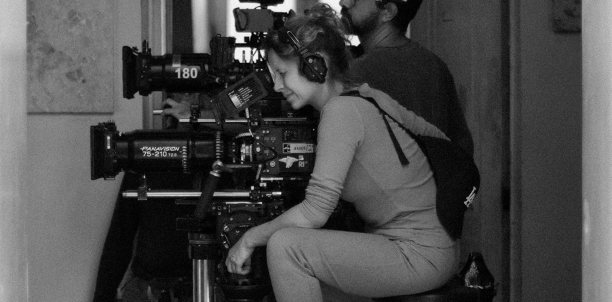
I was especially drawn to the decision to shoot with Panavision anamorphic lenses and vintage camera equipment. There is a softness to the image, a grain and curvature that immediately recalls the cinema of the nineteen seventies, which perfectly mirrors the era’s emotional weight. This was Russian and French cinematographer Evgenia Alexandrova’s first collaboration with Mendonça Filho, and the result is stunning. The anamorphic compositions allow faces to breathe within the frame while urban spaces stretch and press inward, reinforcing a sense of quiet surveillance. As someone who loves vintage aesthetics and classic cinematic language, this visual approach felt both nostalgic and purposeful. The film does not imitate the past for style alone. It inhabits it.
The final act introduces a contemporary perspective through a history student researching political resistance networks. As she uncovers the truth about Armando’s fate and the way his story was erased and rewritten, the film becomes a meditation on memory and loss. Her meeting with Fernando, now an adult who has no memory of his father, is quietly devastating. The conversation unfolds in a hospital that once served as a movie theater, a poetic reminder of how spaces evolve while stories fade.
Critical Reception
Critical response to The Secret Agent has been overwhelmingly positive. Reviewers praised its ambition, visual confidence, and emotional intelligence, with particular attention given to its richly textured aesthetic and moral complexity. While a few critics noted the film’s expansive structure, this quality was often embraced as part of its narrative freedom rather than viewed as a limitation. Wagner Moura’s performance has been consistently highlighted as one of the year’s most powerful.
“There is an honesty to this film that stays with you, even in its quietest moments.”
Awards and Nominations
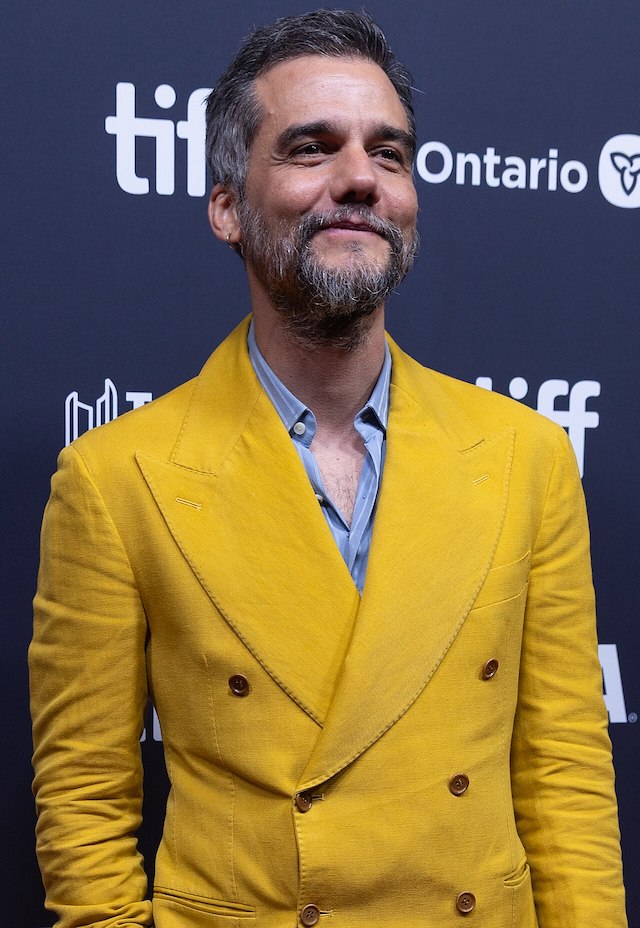
Wagner Moura’s performance earned widespread critical acclaim and culminated in an Academy Award nomination for Best Actor, making him the first Brazilian and South American actor ever nominated in this category.
At the Cannes Film Festival, The Secret Agent emerged as the most awarded film in competition, winning Best Actor for Moura, Best Director for Kleber Mendonça Filho, the Art House Cinema Award, and the FIPRESCI Prize for Best Film.

The film continued its strong awards run at the New York Film Critics Circle Awards, where it won Best Foreign Language Film and Best Actor for Moura. At the Los Angeles Film Critics Association Awards, it received Best Foreign Language Film and was runner-up for Best Picture and Best Lead Performance. At the Critics' Choice Awards, it won Best Foreign Language Film and received a nomination for Best Actor.
At the Golden Globe Awards, The Secret Agent made history as the first Brazilian production nominated for Best Motion Picture Drama. Moura also became the first Brazilian actor to win Best Actor in a Motion Picture Drama, while the film secured the award for Best Foreign Language Film.
At the Academy Awards, the film received nominations for Best Picture, Best Actor, Best Casting, and Best International Feature Film, marking the second consecutive year that a Brazilian film has been nominated for Best Picture.
Final Thoughts
I highly recommend The Secret Agent. I truly believe it deserves the nominations and awards it has received. The film is exceptionally written and beautifully performed, with characters that feel grounded, lived in, and emotionally real. There is an honesty to this story that stays with you, even in its quietest moments. With the exception of the darkly comic and intentionally surreal hairy leg sequence, the film remains deeply rooted in human truth.
The final narrative layer involving the history student and Armando’s son, now a doctor, is a thoughtful and emotionally resonant touch. It reinforces the film’s meditation on memory, inheritance, and the way stories survive across generations. I do believe Wagner Moura is very likely to win Best Actor, and the film stands as a strong contender for Best Foreign Language Film, with potential for even more recognition.
For Turkish audiences in particular, I believe there is something quietly heart-warming here. In the homes, the people, and the sense of community, there are familiar emotional textures that transcend borders. The Secret Agent is not only a powerful political film, but also a deeply human one, and that is where its lasting strength lies.